Rather than answer the professor's suggested question for the week, I would like to discuss the subject we have mostly skirted around in class: race. For the past few sessions, we have engaged in a minor discussion of a topic that has provided a lot of controversy in our nation. The most powerful symbol of this controversy, in my opinion, has been "La Noire de..." The short film depicted the racism of imperialism. In my title, I say the innuendo of race. I mean innuendo in the most direct sense. The dictionary defines innuendo as "an indirect intimation about a person or thing, especially of a disparaging or derogatory nature". "La Noire de..." showed the indoctrinated racism of the French employers, the racism of the viewer, and the assumptions made about civilization by La Noire.
Let me explain. "La Noire de..." was very careful to depict the main character as sophisticated and intelligent. She spoke French, dressed in beautiful tailored clothes, and desired to be part of, what most consider, an elite society. Because of her dark color and her African heritage, her French employers saw only what they wanted: a lazy, unintelligent person, good for nothing but service. I was displeased to find myself surprised by the sophistication of "La Noire". Stereotypes still exist in our society. Going along this point, "La Noire" was full of her own assumptions about French society. The gaiety, the lavish clothing, the elite quality of it all. The point of "La Noire" was to show these stereotypes and undertones of cultural imperialism, while having the audience relate to the main character. Anyone can relate to the idea of feeling imprisoned and desiring autonomy and independence. Classic American cinema depicts this same desire for freedom and independence when relating to a woman of white descent, Holly Go Lightly in "Breakfast at Tiffany's". See below! Clearly, race and gender are still important issues in our society that we should not be afraid to discuss.
Paul Varjak: Holly, I'm in love with you.
Holly Golightly: So what?
Paul Varjak: So what? So plenty! I love you. You belong to me.
Holly Golightly: No. People don't belong to people.
Paul Varjak: Of course they do.
Holly Golightly: I'm not going to let anyone put me in a cage.
Paul Varjak: I don't want to put you in a cage. I want to love you.
Holly Golightly: It's the same thing.
Paul Varjak: No it's not. Holly...
Holly Golightly: I'm not Holly. I'm not Lula Mae, either. I don't know who I am! I'm like cat here, a couple of no-name slobs. We belong to nobody and nobody belongs to us. We don't even belong to each other.
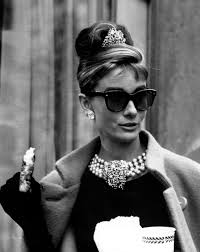
Let me explain. "La Noire de..." was very careful to depict the main character as sophisticated and intelligent. She spoke French, dressed in beautiful tailored clothes, and desired to be part of, what most consider, an elite society. Because of her dark color and her African heritage, her French employers saw only what they wanted: a lazy, unintelligent person, good for nothing but service. I was displeased to find myself surprised by the sophistication of "La Noire". Stereotypes still exist in our society. Going along this point, "La Noire" was full of her own assumptions about French society. The gaiety, the lavish clothing, the elite quality of it all. The point of "La Noire" was to show these stereotypes and undertones of cultural imperialism, while having the audience relate to the main character. Anyone can relate to the idea of feeling imprisoned and desiring autonomy and independence. Classic American cinema depicts this same desire for freedom and independence when relating to a woman of white descent, Holly Go Lightly in "Breakfast at Tiffany's". See below! Clearly, race and gender are still important issues in our society that we should not be afraid to discuss.
Paul Varjak: Holly, I'm in love with you.
Holly Golightly: So what?
Paul Varjak: So what? So plenty! I love you. You belong to me.
Holly Golightly: No. People don't belong to people.
Paul Varjak: Of course they do.
Holly Golightly: I'm not going to let anyone put me in a cage.
Paul Varjak: I don't want to put you in a cage. I want to love you.
Holly Golightly: It's the same thing.
Paul Varjak: No it's not. Holly...
Holly Golightly: I'm not Holly. I'm not Lula Mae, either. I don't know who I am! I'm like cat here, a couple of no-name slobs. We belong to nobody and nobody belongs to us. We don't even belong to each other.

No comments:
Post a Comment
Note: Only a member of this blog may post a comment.